




Airbnb’s Shift: Competing with Independent Hotels and OTAs in Travel
Airbnb’s Shift: Competing with Independent Hotels and OTAs in Travel Airbnb’s Competitive Landscape In recent developments, Brian Chesky has emphasized Airbnb’s strategic pivot...
Airbnb’s Shift: Competing with Independent Hotels and OTAs in Travel
Airbnb’s Competitive Landscape
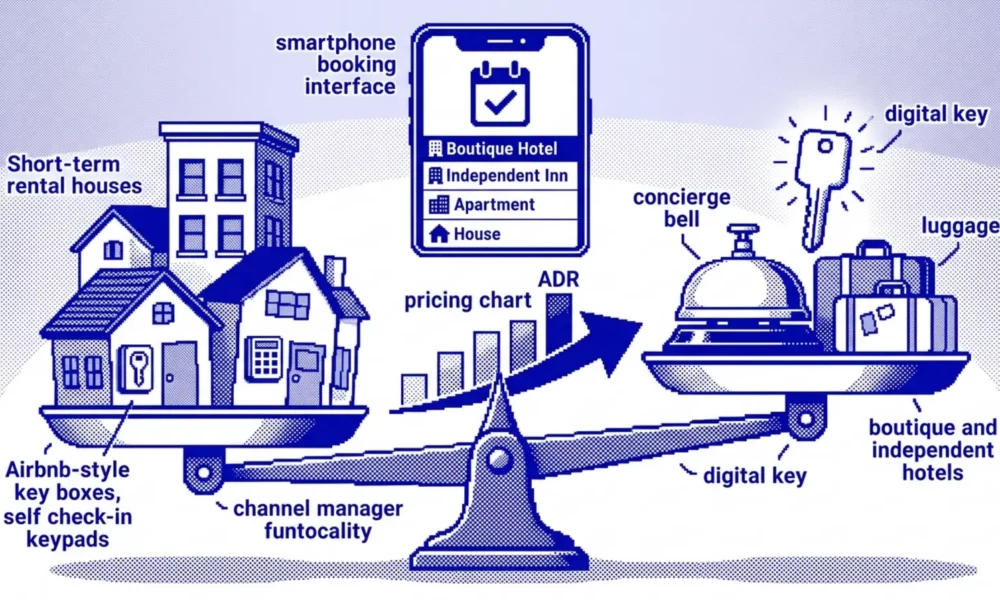
In recent developments, Brian Chesky has emphasized Airbnb’s strategic pivot towards catering to boutique and independent hotels, which comprise nearly half of the global hotel inventory. This segment often faces disadvantages when dealing with traditional online travel agencies (OTAs) like Booking.com and Expedia, primarily due to higher commission structures. Such dynamics create a significant opportunity for Airbnb to present itself as a viable distribution platform for independent hospitality businesses, thus entering a “multi-billion dollar” market that seeks alternatives to conventional hospitality models.
Table Of Content
Expanding Beyond Traditional Rentals
A notable aspect of Airbnb’s evolution is its ambition to transform from a mere listing platform to a holistic travel service provider. Chesky outlined plans to develop an “ecosystem of services” that encompasses various aspects of the travel experience. These offerings include delivery services prior to guest arrivals, airport transfers, luggage storage, and car rentals, all integrated into the Airbnb app. This shift not only broadens the scope of services Airbnb provides but also aims to keep users engaged within its platform, potentially increasing customer loyalty and revenue from diverse service lines.
Challenging Established OTAs
Chesky has expressed a concrete intention to compete directly with established OTAs. Airbnb aims to differentiate itself by offering lower commission rates for independent hotels compared to industry giants. The visibility limitations faced by independent properties on OTAs are also being addressed; Airbnb’s initiatives, like the Airbnb Plus program, aim to enhance the exposure of unique listings, promising top placements and support for quality enhancements. This positioning could lead to a reshaping of the competitive landscape for short-term rental operators, as Airbnb blends traditional accommodations with innovative hospitality solutions.
Implications for Short-term Rental Professionals
The evolution of Airbnb’s strategy presents both challenges and opportunities for short-term rental managers and property professionals. As Airbnb embraces independent and boutique hotels, properties listed on the platform may face increased competition not only from traditional hotels but also from curated boutique offerings that could possess higher average daily rates (ADR). Furthermore, as Airbnb’s service ecosystem matures, operators might need to reevaluate their distribution strategies and partnerships, weighing factors such as commission rates and customer segmentation. The shift toward a more comprehensive service approach may necessitate adaptations in how properties engage with guests and manage bookings.




No Comment! Be the first one.